Justice Takes Courage: Reflections on Hope, Diversity, and Beloved Community After the Midterms


 RSS Feed
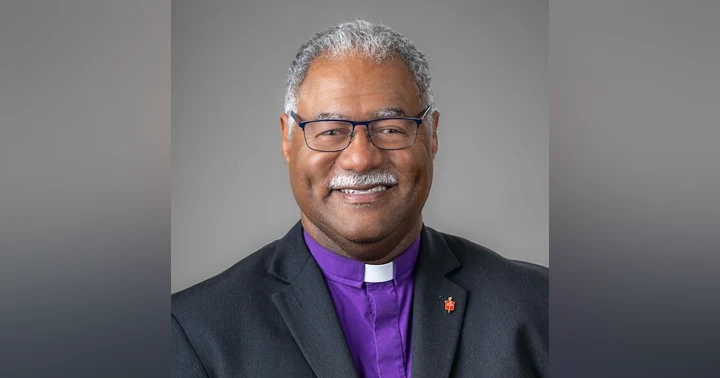
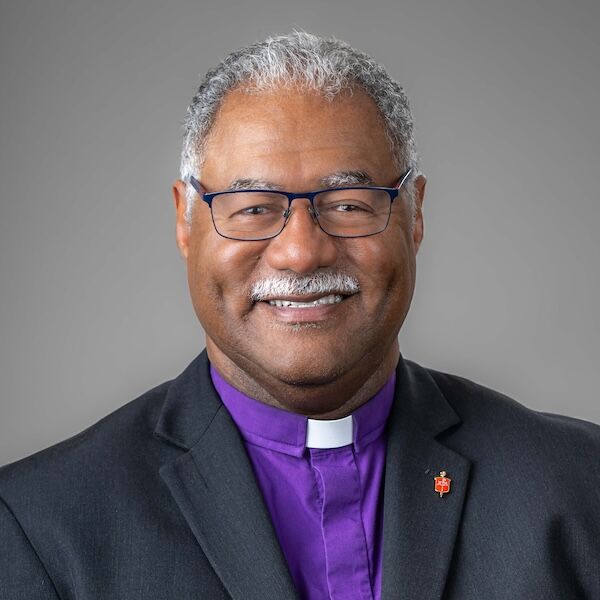
Justice Takes Courage: Reflections on Hope, Diversity, and Beloved Community After the Midterms with Bishop Julius C. Trimble
Show Notes
The conversation focused on the post-midterm election climate in the United States, exploring themes of hope, justice, diversity, and the continued work toward creating a more beloved and equitable community. This episode drew on a recently published article, “Justice Takes Courage,” and considered what the election results might signal for individuals, communities, and faith leaders striving to encourage compassion and justice in a divided world.
Three Key Takeaways
1. Hope and Diversity as Foundations for Change
The discussion explored the uplifting effects of the election results, noting how a more diverse group of elected officials—including indigenous people, Muslims, Christians, and individuals from different racial backgrounds—signals renewed hope for the American democratic experiment. A key theme that emerged was that diversity, equity, and inclusion (DEI) are not “dirty words,” but central, positive American values affirmed by the electorate. The election was described as a rejection of vitriol, hatred, and fear-based politics, with the participants expressing gratitude that people’s votes reflected a desire for a more inclusive and compassionate society 01:40.
2. From Scarcity and Fear to Love and Abundance
One concept discussed was the shift from fear-based policymaking and the ideology of scarcity toward a theology of abundance and love. The discussion emphasized that perfect love casts out fear and that faith communities are called to foster beloved community marked by justice, equal opportunity, and care for all neighbors. Examples included advocating for affordable lives, accessible healthcare, and fair housing—not just charitable acts, but systemic justice 14:41. The message encouraged listeners to reject the notion of limitation (“the pie is big enough for all”) and instead focus on creating tangible improvement in people’s lives.
3. The Ongoing Mandate for Justice and Prophetic Witness
A key theme that emerged was the recognition that the work of justice and love is never complete and has no expiration date. The conversation focused on the need for uncommon courage—a willingness to say “no” to injustice and “yes” to equality, compassion, and mercy in both personal and public life. Faith leaders and local communities were urged to engage in both acts of charity and advocacy for systemic change (e.g., raising the minimum wage, expanding health access), serving as the “light of the world.” The episode closed with a message of encouragement for those feeling conflicted post-election: let your light shine, champion justice in your community, and remember that the journey toward beloved community is ongoing 20:07.
Visit tobeencouraged.com for more resources, links to the featured article “Justice Takes Courage,” and past episodes. Join the conversation and share how you’re helping create a more just and compassionate world.
Reverend Dr. Brad Miller [00:00:00]:
Hello again, good people, and welcome to the To Be Encouraged podcast with Bishop Julius C. Trimble. This is the podcast where we look to offer an encouraging word to an often discouraged world. I'm your co-host, Reverend Dr. Brad Miller, and we're recording this podcast a week or so after the midterm elections. And Bishop Trimble wrote from his position as General Secretary of Church and Society an article recently called Justice takes courage. So, Bishop, let's have a conversation about the recent elections and about your article. Let me just start here.
Reverend Dr. Brad Miller [00:00:39]:
What was some of your initial kind of, you know, initial reactions to the midterm elections? What went through your heart?
Bishop Julius C. Trimble [00:00:50]:
Well, I think someone said hope springs eternal. After the midterm elections, I wrote this in the article, the election results buoyed my hope meter, meaning that I was becoming a bit discouraged, even though I'm the minister of encouragement.
Reverend Dr. Brad Miller [00:01:09]:
Yes, indeed.
Bishop Julius C. Trimble [00:01:11]:
Yes. I was becoming discouraged because I was wondering if there was this major rejection of the United States of America being a country that really has benefited from the diversity of people who have come here with many different stories, as well as those people who are indigenous to this land. And my hope meter was really raised to a high level, Brad, and I hope you felt the same way.
Reverend Dr. Brad Miller [00:01:39]:
Indeed.
Bishop Julius C. Trimble [00:01:40]:
Because this was a historic election, and it is the most diverse group of elected officials going to Congress, as well as state and and local governments in the history of the United States. And so I think it really is a positive sign for what people call this democratic experiment, that we move toward a more perfect union. So I was very encouraged, and I thought that the election also was a rejection of so much vitriol and hatred that we've been subjected to.
Reverend Dr. Brad Miller [00:02:22]:
Yeah. In your article, one of the first words you used in the second paragraph was hallelujah. So tell me about that in terms of part of the hallelujah that you said has to do with just the intensity and TV ads and all the vitriol that went on.
Bishop Julius C. Trimble [00:02:41]:
Think about the huge amount of money that was spent, Brad, for people really to attack their opponents and to curry votes. I think at the end of the day, people said, my voice, my life, my struggles are more important than a handful of billionaires who simply want to determine who gets elected. So I think people power won out over multibillionaire dollars that were spent.
Reverend Dr. Brad Miller [00:03:16]:
Indeed. Indeed.
Bishop Julius C. Trimble [00:03:17]:
Trying to essentially buy an election. And in some places they gerrymandered districts and the people still voted for change.
Reverend Dr. Brad Miller [00:03:25]:
Indeed. Well, a lot of that gerrymandering kind of thing backfired on those who wanted to perpetuate that. I want to ask you about it in your article, which we're going to put links to this in our show notes here today to the article that you wrote. So people can read the entire article, and we'll put it in a blog post as well on your website, ToBeEncouraged.com. But in reflecting on this election and its implications for the greater good of our country and in our churches and our pastors and our church members, what do you think we can learn from this? And what do people still yearn for? What can we learn and what can we yearn for?
Bishop Julius C. Trimble [00:04:10]:
Well, I think we can learn from it. There was, I believe, a rejection of the notion that people can only gravitate towards hatred of their neighbors and blaming people who are different and what people say are culture wars. I think people really do have an appetite for a more more beloved community where people are respected regardless of their sexual orientation, regardless of their race or their religion for that matter. So I think there was a rejection of what I call bullying partisan politics.
Reverend Dr. Brad Miller [00:04:50]:
Yes.
Bishop Julius C. Trimble [00:04:50]:
A rejection of a lot of the cruelty that we've seen. Even though a lot of people want to have secure borders, they never thought that people would be disappeared and and US citizens who were peacefully protesting would be killed in the process of their protesting. So I think that this election really was a rejection of so much of the cruelty
Reverend Dr. Brad Miller [00:05:16]:
and
Bishop Julius C. Trimble [00:05:16]:
insensitivity. Yes. And the abandonment of people's concerns about just wanting to have affordable lives, wanting to have an opportunity to educate their children, and wanting peace more than we really want to be in protracted wars.
Reverend Dr. Brad Miller [00:05:41]:
It's also a repudiation of those who want to target certain groups of people. Immigrants is what I'm thinking of particularly with all the detention centers and all that kind of thing going on. And I think it speaks to something we just got to kind of name Christian nationalism as a force out there that Those are folks who would not agree with the basic sentiments of what you and I are saying right now. Many of those folks are saying that this was somehow some rejection of God's will, this election. So what do you say to those?
Bishop Julius C. Trimble [00:06:12]:
Think about it, Brad. Think about some of the people who were elected. Adam Hamilton.
Reverend Dr. Brad Miller [00:06:16]:
Well, let's go there. Yeah.
Bishop Julius C. Trimble [00:06:18]:
James Talarico, Freddie Haynes, Reverend Freddie Haynes from Texas. I think this election may serve somewhat as a rejection of Christian nationalism as a way of defying the gift of diversity. Mm-hmm. I think the election really affirmed the gift of diversity. It's interesting because in 2025, January 2025, one of the first things that came from the current administration was, an all-out assault on DEI, diversity, equity, and inclusion.
Reverend Dr. Brad Miller [00:06:57]:
Right.
Bishop Julius C. Trimble [00:06:58]:
And here we are now at the midterms, and what do you see but a great—
Reverend Dr. Brad Miller [00:07:03]:
Hey.
Bishop Julius C. Trimble [00:07:04]:
What it seemed like, some call it a blue tsunami.
Reverend Dr. Brad Miller [00:07:08]:
Right. Well, it was also—
Bishop Julius C. Trimble [00:07:10]:
A blue wave, if you will. And I've often said, we don't have to endorse a particular party, but Christians should endorse a particular way of treating our neighbors. Right. Because the Bible says we are to love God and love neighbors. Leviticus 19, right, says, you shall not oppress your neighbor nor rob him. And I would say him or her. When a stranger sojourns with you, you shall do them no harm. You shall treat the stranger among you as the native among you, and you shall love him as yourself, For you yourself were strangers in the land of Egypt.
Reverend Dr. Brad Miller [00:07:49]:
Yes.
Bishop Julius C. Trimble [00:07:49]:
So God in the Old Testament and New Testament is constantly reminding us, you know, to love God, to love our neighbor, and to love ourselves is really reflective of what it means for us to be the light of the world.
Reverend Dr. Brad Miller [00:08:07]:
Well, you mentioned how basically the voters did their own version of DEI, didn't they? In the sense of bringing it into, Well, I mean,
Bishop Julius C. Trimble [00:08:18]:
hey, we've got indigenous people being elected.
Reverend Dr. Brad Miller [00:08:23]:
Right.
Bishop Julius C. Trimble [00:08:23]:
Mexicans being elected. We've got Black folks being elected. We have Muslims being elected. We have Christians being elected. Then we have moderates and conservatives, and I'm sure there's some short people and tall people.
Reverend Dr. Brad Miller [00:08:40]:
Well, I think—
Bishop Julius C. Trimble [00:08:42]:
So I celebrated because When I look at that, I say, I think maybe it's a sign from God that we should not give up hope nor assume, Brad, that our vote doesn't matter. Because that's one of the narratives that's been going on for several years is that, well, really—
Reverend Dr. Brad Miller [00:09:00]:
What can we do about it? What are we going to do? Yeah. Well, I think it speaks to that there are those who would say that DEI is just kind of a dirty word or whatever. And I think we learned that diversity and equality and inclusion are not a dirty word. They are all very American and part of who we are. And so that came to the forefront here, and I was thrilled to see that. And a lot of that's embodied, I believe, in the faith-based approach to some of the people that you mentioned who ran for office. Adam Hamilton, Talarico in Texas.. Much of what they said was profound Christian teaching in terms of their political campaigns.
Reverend Dr. Brad Miller [00:09:46]:
I just kept hearing both those candidates and others as well just saying, love God and love neighbor as a foundation, and grace, and grace. And those seem to be pretty profound and basic Christian principles to me. Can you speak to that? What did you hear from those 2 candidates and others as well?
Bishop Julius C. Trimble [00:10:04]:
Well, I heard from— I heard— what I heard from the candidates is that kindness is not a cruel word.
Reverend Dr. Brad Miller [00:10:09]:
Yes.
Bishop Julius C. Trimble [00:10:10]:
You know, we don't have to belittle each other in order to make the— you know, to move towards a more perfect union.
Reverend Dr. Brad Miller [00:10:18]:
Right.
Bishop Julius C. Trimble [00:10:18]:
And, you know, we can't just say that we're concerned about the baby in the womb and not be concerned about a baby after the baby comes out of the womb. So I think people really rejected the notion that gas prices don't matter. Maybe they don't matter if you make $1 million or more a year, or if you're a billionaire or a trillionaire, then you probably don't care about the fact that gas was up to $5 and $6 a gallon. My youngest son lives in California, And the last time I was there, boy, gas was like twice, $2 more than it was in Indiana. Right.
Reverend Dr. Brad Miller [00:11:03]:
And
Bishop Julius C. Trimble [00:11:04]:
so I said, you know, this notion that people, affordability is a hoax. Well, I don't think so.
Reverend Dr. Brad Miller [00:11:10]:
I
Bishop Julius C. Trimble [00:11:11]:
don't think the farmers felt that way either. And when you think of places like Texas and Mississippi and Kansas, you know, a lot of farmers are saying, you know, we're We're voting for change. We're voting for change.
Reverend Dr. Brad Miller [00:11:26]:
I think it also shows a need to connect and be a good communicator. Adam Hamilton's a great preacher, as we both know from our experiences with him. But part of what was going on, what you're describing there, was the great disconnect between many people who did not see high gas prices and affordability as issues and the war as an issue, things like that. And we saw some candidates coming forward and saying, yeah, these are issues, and they connected and communicated with people on their level as real human beings rather than being talked down to. That's what I heard at least. What say you about that?
Bishop Julius C. Trimble [00:12:06]:
Well, yeah, I think a colleague of mine, Jamie Hawkins, wrote a book entitled In God We Trust: Origins of Christian Nationalism. And in that, he talks about what does it mean What does it mean to worship an impartial God where we also treat people for who they are? If we all are, we all bear the image of God, and so we cannot simply be casting parts of the population as somehow worthy of being discounted or dismissed or discouraged. So I'm a firm believer that this election was an invitation for us to do what I call in my article, maybe this is a time for a turnaround or a U-turn.
Reverend Dr. Brad Miller [00:12:58]:
Yeah.
Bishop Julius C. Trimble [00:12:59]:
So we could turn away from the vitriol and the blaming and actually get some problems solved. People said that the last Congress spent 100 days in session when we had people on a warship out in the Middle East that spent over 360 days without coming to shore. Yeah. So, you know, I think this is— I don't think this is just a pass for the Democrats. I think this is an invitation for the new Congress coming in to say, listen, we think that the president maybe has been doing a lot of overreaching, We really want to experience what it means to have 3 branches of government. Sure. Sure.
Reverend Dr. Brad Miller [00:13:47]:
Well, that's a lot.
Bishop Julius C. Trimble [00:13:48]:
Yeah. I think there'll be a rude awakening if the only thing that happens are investigations of the current administration. I think people really want to see change.
Reverend Dr. Brad Miller [00:14:00]:
I think they would see both. They would see the accountability on one hand and also the effective addressing of these issues of affordability and the war and so on.
Bishop Julius C. Trimble [00:14:13]:
I totally agree.
Reverend Dr. Brad Miller [00:14:15]:
And I think you can do both. And I think we've lived in a time here and still do this to a great degree, a time when there's a lot of fear-based policymaking, a lot of fear-based things that were put forward to us by the Trump administration and their followers. And Christian nationalism is all about fear. And I think you and I both know what the Bible says about fear. What casts out fear, my friend?
Bishop Julius C. Trimble [00:14:40]:
Love.
Reverend Dr. Brad Miller [00:14:41]:
Love. Perfect love casts out all fear. And I think that's what we're seeing, a response to that. And I love how it really goes to something you say a lot in our podcast episodes, and I've heard you preach about it and teach about it, and that is the creation and the nurture of beloved community. And so go with me here now for a minute about saying what we have done, maybe take a step towards beloved community, and what are the elements of that? What are the What are we aspiring for as we look to continue to create and nurture what you've called many times beloved community?
Bishop Julius C. Trimble [00:15:17]:
Well, I've been on a lot of calls, Brad, recently in recent days, leading up to the election and even post-election with faith leaders, many of them that are doing similar work that I'm doing in the areas of peace and justice and support for immigrant rights and and support for human dignity and the access to voting rights and healthcare. Many of the faith leaders that I've been in conversation with are inspired by what we might call a new hunger and thirst for beloved community, where equal justice is not just something, Brad, that's aspirational. People being treated fairly shouldn't be something that's aspirational. It should be something that We can count on. It should be operational. And I think that there's much more of an appetite to see more of the sharing of the wealth of the wealthiest nation in the world. Why would we have so many people who can't afford housing, who don't have access, who had to cancel their health insurance because they no longer could afford the premiums? So when you get people elected, people are saying, well, they elected so many Democratic socialists and they elected some moderates and some progressives. I think people want to see a change in the sense that too many people are being left out of the pursuit of happiness.
Bishop Julius C. Trimble [00:16:54]:
Too many people are being left out of the quote-unquote American dream, if you will. Right. When they said it used to be at the— you could— the average home buyer would be age 26 when they got their first home. Now that is age 40. So most 26-year-olds, even if they have a college degree, are not in a position to buy a home unless they've been— unless they receive legacy wealth. And so America wasn't built on being dependent on legacy wealth, which is what President Trump— Sure. Because President Trump benefited from what's called legacy wealth. So what I'm seeing is really people who are hungry for a much more positive government approach.
Reverend Dr. Brad Miller [00:17:41]:
Yes, indeed.
Bishop Julius C. Trimble [00:17:43]:
A government that has some garments of compassion, Yeah. I think what we've been experiencing is initially with the Dodge cuts, a government that has lacked what seems like a sense of compassion with the elimination of humanitarian aid, this notion of America first.
Reverend Dr. Brad Miller [00:18:08]:
Yes.
Bishop Julius C. Trimble [00:18:09]:
I think people are saying, okay, well, America first. It doesn't seem like we're even doing America first if we're Committing so much money to wars and to giving benefits to the wealthiest of the wealthy in our society. There's plenty of work to be done, but it's been said that you can't govern unless you win. And once you win, you ought to govern in such a way that people feel like they're being paid, that their lives are made better. Yeah.
Reverend Dr. Brad Miller [00:18:43]:
Well, a lot of what we've been experiencing is kind of the presumption that there's a lack or there's a scarcity of resources to go around. And then people saw the corruption where they saw massive amounts of resources going to the billionaire class and military spending and so on. And you do not have to be a political genius to see that something's not aligning here. And I think what we're realigning here, being in a a series of justification of seeing where there is abundance out there. There is, you know, God is an abundant God, and there's all kinds of things that we have. And we the people, when we the people are truly we the people, we can do a lot of good things together. As you say, there's a lot of work to be done, but we can't get a lot of work done until we kind of break this old way of fear and lean into love. That's kind of the way I'm seeing it.
Reverend Dr. Brad Miller [00:19:35]:
Yeah. And I think You've said it well here, that the work of justice continues. You mentioned it on the United Methodist building where you work at. What does it say there, my friend? You mentioned it before.
Bishop Julius C. Trimble [00:19:47]:
Well, right now, the sign has changed, but right after the election, the sign said, the work of justice continues. The work of love never ends. So even during a— I mentioned that my hope meter was raised by the outcome of the election, But I never felt that the work of love had an expiration date. We still have the mandate. Jesus said not only to love our friends and our neighbors, but even to love our enemies. Mm-hmm. So I think the call of the work of love and the prophetic call for what Joan Chittister calls uncommon courage is really timely. And we saw, I think that was evidenced by persons who were elected as well.
Bishop Julius C. Trimble [00:20:33]:
This is a time for us to say no to some things and to say no loudly and to say yes to other things. No to the sexual abuse of women. No to the rejection of the stranger. No to the rape of the trees. Hmm. And the poisoning of the oceans and the pollution of the skies. But yes to equal rights and equal voting access for all. Yes to alleviation of suffering.
Bishop Julius C. Trimble [00:21:01]:
Yes to embracing difference. Yes to feeding those who are hungry. And it shouldn't just be, as someone said, if my church, if I go and volunteer at my church and give out food baskets, they call me a saint. But if I ask the question, should we raise the minimum wage, they might call me a communist.
Reverend Dr. Brad Miller [00:21:22]:
Wow.
Bishop Julius C. Trimble [00:21:22]:
So I think Christians need to be willing to address not only acts of mercy bread, Not only acts of charity, but acts of equality, of justice. What does it mean to have a living wage when the federal minimum wage hasn't been raised for over 20 years?
Reverend Dr. Brad Miller [00:21:41]:
All right. Well, what you're talking about is issues there of not only just addressing the crisis moment of hungry people. My church this very Sunday is building baskets, but we're also all part of a fair housing coalition that tried to provide reasonable housing for people as well. And so I love to see that happening. So let's kind of bring our conversation around to that in terms of you've said these are the things we need to say no to, and part of the election was saying no to certain things, and part of the election is saying yes to certain things. Let's bring it down to what about that pastor or that local church which is having some conflicting thoughts about this election? There are some people who are very unhappy about it, and a lot of people were thrilled about it, and still a lot of raw emotion about it. What should people, you know, let's, I always like to kind of conclude our conversations with what are we being encouraged about? But you've done a good, really good job here today in defining kind of prophetic word about this here. But particularly to that pastor or to that church which has experienced some, still some raw emotion about this, what would be the encouraging word you might share with him here today?
Bishop Julius C. Trimble [00:22:51]:
Well, you know, my article was a post-election question from Jesus.
Reverend Dr. Brad Miller [00:22:59]:
Yes.
Bishop Julius C. Trimble [00:22:59]:
Jesus, you know, Brad, asked a lot of good questions.
Reverend Dr. Brad Miller [00:23:02]:
Indeed.
Bishop Julius C. Trimble [00:23:02]:
Who do people say that I am is one of those critical questions. And he said to, you know, Simon Peter, you know, do you love me? And, you know, of course, you know, we would probably say, yes, you know, of course, Jesus, you know we love you. We sing about you every Sunday. We raise hymns and we raise prayers. And well, Jesus said, if you love me, then therefore, Tend my lambs, feed my sheep. And in other words, do something about the conditions of the people that are part of the human family. So I say to pastors and to laypeople alike, you know, that the gospel, the gospels are important, particularly when we are reminded, you know, to let our light shine. Yeah.
Bishop Julius C. Trimble [00:23:49]:
You know, we're told we're the salt of the earth and we are the light of the world. Let your light shine before others so that they may see your good works, but give glory to God who is in heaven. So we know that our works don't save us, but our works make the world a better place.
Reverend Dr. Brad Miller [00:24:07]:
Indeed. Wow.
Bishop Julius C. Trimble [00:24:08]:
And I remember a colleague in Indiana said some years ago, you know, Bishop, we can't transform the world by going to church, but we can transform the world by being the church. And I would say to pastors, it's not about— at the end of the day, the newspapers report winners and losers. But Brad, what if we decided to pray for all people who are privileged to be in leadership positions and say, you all can be winners if you put people before partisan politics, if you put the love of God and neighbor before padding your pockets with inside trading and getting rich quick. You can let your light shine and you can be a conservative, you can be a progressive, you can be a liberal, you can be a Republican, a Democrat. You can let your light shine in such a way that God is glorified. One of the things, I think a big thing, we ought to do a special a special podcast around is I think this election reflected for me that we have a God of abundance because—
Reverend Dr. Brad Miller [00:25:21]:
Yes.
Bishop Julius C. Trimble [00:25:22]:
One of the ways in which we stoke fear, Brad, is to create this notion, this theology, this ideology of scarcity.
Reverend Dr. Brad Miller [00:25:30]:
Yes.
Bishop Julius C. Trimble [00:25:30]:
There's not enough for Brad to have and Julius to have both to be— somebody's got to be shorted in order for you to be blessed.
Reverend Dr. Brad Miller [00:25:40]:
The pie's big enough. Pie's big enough for all of us. Yeah.
Bishop Julius C. Trimble [00:25:44]:
Yeah.
Reverend Dr. Brad Miller [00:25:45]:
Well,
Bishop Julius C. Trimble [00:25:45]:
if the pot is big enough, the pie is big enough for all of us to have a slice of the pie.
Reverend Dr. Brad Miller [00:25:51]:
Indeed.
Bishop Julius C. Trimble [00:25:51]:
And to have and to benefit from.
Reverend Dr. Brad Miller [00:25:55]:
Well, what I'm hearing you say here as we kind of bring our conversation around is that if we're followers of Jesus, that's a win-win, not a win-lose or a lose, you know, it's not a win or a loser thing. It's a win-win if we follow Jesus. 'Cause what we're really saying here, if we just put in the, put the words of Jesus, the Great Commandment, to love God and love others, that's a pretty good place to start, don't you think?
Bishop Julius C. Trimble [00:26:17]:
Absolutely. Absolutely.
Reverend Dr. Brad Miller [00:26:19]:
Indeed. Indeed. Well, thanks for sharing with us here today, Bishop Julius Trimble, and always a prophetic word. And just, I just want to thank you for not only what you shared here today, but for your article, which is entitled Justice Takes Courage. And we'll put links to that and how people can get that in our show notes at tobeencouraged.com.
Bishop Julius C. Trimble [00:26:42]:
It'd be good to hear from people. Do you think that we're at a point in our history here in the United States of America where we could experience what I call a positive U-turn in the sense that we start looking out for our neighbors and stop overstating some of the problems as being somehow unsolvable. I've traveled this year outside of the country probably more than I ever have. I've been to Canada and to Europe as well, and they found a way for people to have health insurance.
Reverend Dr. Brad Miller [00:27:22]:
Sure.
Bishop Julius C. Trimble [00:27:22]:
It may not be a perfect system, but they found a way for people to have access to health insurance, to have everybody have access to a doctor.
Reverend Dr. Brad Miller [00:27:33]:
Absolutely.
Bishop Julius C. Trimble [00:27:33]:
They found a way to to address public transportation and create bike lanes and electric buses and to do things in such a way that— So the problems that we face in our society aren't necessarily unsolvable, but it's amazing how we like to talk about American ingenuity, then this is a time really to show what Joan Chittister calls an uncommon courage. The time is now, not only for prophetic witness, but I think a movement towards a more gracious society, a more gracious society, if you will.
Reverend Dr. Brad Miller [00:28:24]:
So I think that's the other element. We talked about Jesus talking about love God, love others, but grace, you know, if we live in grace, that's going to be a good thing. Well, some great things here. I would encourage people, if they'd like to be in contact with you or me, and you can always make a response through the website. There's a place right there on the website where you can respond, and that word will get back to Bishop Julius Trimble and to myself, and we will respond. So you can get in. Our website is tobeencouraged.com. That's also the place where you can find Oh, well over 125 episodes of this podcast.
Reverend Dr. Brad Miller [00:29:01]:
Lots of great information there, and the blog post and other opportunities to hear the prophetic word of Bishop Julius C. Trimble. And this is the To Be Encouraged podcast, which you can hear on a regular basis here at tobeencouraged.com. My name is Reverend Dr. Brad Miller, the co-host. We're glad to have you with us and hope you join us next time here on To Be Encouraged. This is a place for an encouraging word for an often discouraged world.