Voting as a Christian: Integrating Faith, Justice, and Community at the Polls


 RSS Feed
Show Notes: To Be Encouraged
In this timely episode of To Be Encouraged, the conversation focused on the intersection of faith, politics, and civic responsibility as the United States approaches midterm elections. Thoughtful dialogue explored what it means to vote as a person of faith, how biblical teachings interact with political engagement, and the impact that voting (or not voting) has not only on democracy but on local communities and individual wellbeing.
A key theme that emerged was the responsibility of Christians—and all citizens—to participate actively in the democratic process, viewing voting not just as a civic duty but as a spiritual act rooted in justice, mercy, love, and neighborly concern.
Three Takeaways
1. Voting is Both a Privilege and a Responsibility
The discussion explored the idea that voting is an essential tool for influencing society toward justice and compassion. Not voting can result in communities being overlooked or underserved, as elected officials are ultimately accountable to those who cast ballots. The importance of being an informed and engaged voter was underscored as a way to express care for neighbors and to help build healthier communities 01:12 02:48.
2. Faith and Politics Are Inextricably Linked
One concept discussed was the misconception that religion and politics must exist in separate spheres. The dialogue highlighted biblical mandates to love God and neighbor, suggesting these commands naturally extend into the public square and civic life. Concrete examples were given—such as supporting social programs like education and healthcare—to illustrate that loving one's neighbor requires engagement with political systems that shape the wellbeing of the community 02:48 04:18.
3. Navigating Fear, Partisanship, and Discernment
Several points were raised, including the prevalence of fear-based messaging in political campaigns and the temptation to view complex issues in black-and-white, partisan terms. The conversation encouraged listeners to approach voting prayerfully and discerningly, resisting manipulation by fear or simplistic “us vs. them” rhetoric. Participants were encouraged to vote for a “preferred future” rooted in compassion, grace, and biblical teachings—rather than elevating any imperfect individual as “God’s candidate” 14:53 29:13.
Ultimately, listeners were encouraged to pray, research issues and candidates thoughtfully, cast their votes, and hold elected officials accountable for actions that promote justice, mercy, and the common good 34:37. Voting, it was concluded, is both an act of hope and a concrete step towards building a more just and loving society.
Reverend Dr. Brad Miller [00:00:00]:
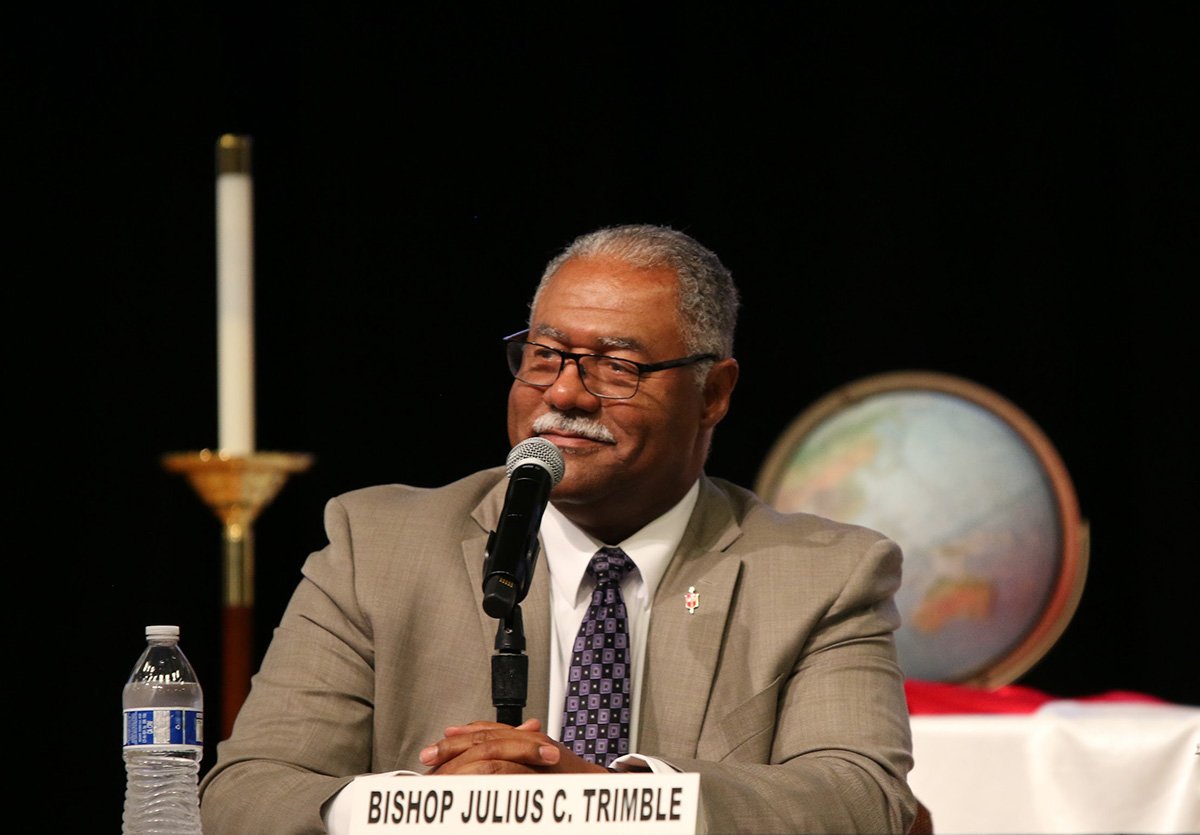
Hello, good people, and welcome to the To Be Encouraged podcast with Bishop Julius C. Treble. I'm your co-host, Reverend Dr. Brad Miller, and this is the podcast where we look to offer an encouraging word to an often discouraged world. And Bishop Treble, we are, as we come together here today for our conversation, we are just one week away from the midterm elections, which are a dramatic time here in the United States for what comes next politically and in our governmental systems. And so I know there's some things on your heart today you'd like to talk about, how Christians can respond to an election. So first of all, welcome to our conversation, my friend.
Bishop Julius C. Trimble [00:00:48]:
Thank you, Brad. It's good to be on the Be Encouraged podcast with you. You know, our vote is our power, our power. And unless we exercise our voting power, sometimes we're discounted or in some cases miscounted because we don't exercise that power. Right. I think you can't have a healthy democracy unless you have people in high numbers who are willing to participate in that democracy and take the time out to become educated enough to engage and take advantage of the right, and I say the privilege we have to vote. Elected officials are accountable to voters, theoretically. And if we don't vote, then we can easily be ignored completely.
Reverend Dr. Brad Miller [00:01:48]:
Yes. Well, it begs the question now, What does it mean to vote as a Christian or to be a Christian voting? What I mean by that is, there's lots of things the Bible says, but some people want to discount what others say about politics, and there's some people who say, let's just keep religion and politics apart completely. So what say you to that about those who would say, let's keep religion and politics completely separate?
Bishop Julius C. Trimble [00:02:16]:
Well, I don't know what Often when people say things, I'm not sure what they really mean by that.
Reverend Dr. Brad Miller [00:02:22]:
Yeah.
Bishop Julius C. Trimble [00:02:22]:
Do they mean that we have faith in God and we worship God and we practice our religion and then we become different people or live bifurcated lives or divided personalities and commitments when it comes to participating in the welfare of the community. I think to be a faithful Christian is to be concerned about the welfare of your community and the welfare of others. I mean, if our primary mandate, Brad, is to love God and love neighbor, it seems to me there's a direct line between loving God, between loving neighbor, and engaging in the political process of helping our government and our communities to be as healthy as possible.
Reverend Dr. Brad Miller [00:03:15]:
Well, you really can't disassociate yourself from the political process when it comes to providing services for our neighbors. We're talking about food systems, we're talking about healthcare systems, we're talking about transportation systems, we're talking about systems of economics and other things of this nature, which cannot be accomplished without political systems to help them to implement these services for the people. So that says then that if we were to love God and love neighbor, those are not really separate things. They are integrated things. Would you say so? That they are— it's not an either/or, it's an and, right?
Bishop Julius C. Trimble [00:03:58]:
Yeah, God presents God's servants as being the hope of the nations in Matthew, whom I uphold, the servant successes of God, in whom my soul delights. So it's God's expectation. When the prophet Micah says, What does God require but to do justice?
Reverend Dr. Brad Miller [00:04:18]:
Yes.
Bishop Julius C. Trimble [00:04:18]:
Love mercy, walk humbly with God. Doing justice is a form of love. Mercy and kindness are forms of love, expressing love. Walking humbly with God means in part, not only being in the presence of God for worship, but also being in the presence of God for welcoming and witnessing to the goodness of God on behalf of and towards creation and those who have been created. So I think it's unfortunate that the vast majority of people who don't vote almost match the number of people who do vote.
Reverend Dr. Brad Miller [00:05:01]:
Yes.
Bishop Julius C. Trimble [00:05:01]:
So I think at the last presidential election, as many as 90 million people who potentially could have voted did not vote. Right. So often when it comes to persons being elected, it's not always the majority of the citizens in the community that actually elect. It becomes a percentage of those persons. So I'm encouraging people, I've already exercised, my wife and I, we did early voting, but I'm encouraging people to embrace this as not only an opportunity to make your voice heard, but to express a commitment to justice, kindness, and mercy by actually participating in voting. We're not voting for perfect people, and the people who— when we cast a vote, we're not casting a vote as a perfect person.
Reverend Dr. Brad Miller [00:05:54]:
Right.
Bishop Julius C. Trimble [00:05:55]:
But we are voting for— I vote for what I call Breadth of Preferred Future. So I look at it and I say—
Reverend Dr. Brad Miller [00:06:02]:
I like it.
Bishop Julius C. Trimble [00:06:02]:
I like it. I said, now, who are these candidates who really potentially can be committed to what I would consider preferred future, where children are not separated from their families under the guise that we're deporting the worst of the worst, and where people are not cut off from food benefits who actually need them? I'm not opposed to cutting out waste. I'm not opposed to removing fraud from social benefits, but there's something ungodly, Brad, I believe, when we commit trillions of dollars to military buildup under the guise of keeping peace, and yet we cut the legs Yeah, cut the legs off of our social safety net programs and just say people just ought to make it on their own.
Reverend Dr. Brad Miller [00:07:02]:
I'm interested. You said that you vote for a preferred future, and I think that's true. And yet many people say that their preferred future is a godly thing. And if your preferred future is different than my preferred future, that's an ungodly thing. And therefore we have churches and religious leaders often mandating or dictating how they want people to vote based on their understanding of a preferred future. And it seemed like this is an area that's a little bit tricky for pastors and church folks to navigate, to how do we be men and women of God in our churches and know that there are churches and church leaders who are saying, hey, you cannot be a Democrat and be voting for God, and other people saying you cannot be a Republican and vote for God. They're very siloed in those kinds of ways. So help me understand your take on that.
Reverend Dr. Brad Miller [00:08:03]:
You say you want to vote for a preferred future. What if that goes against somebody at the church down the street and their preferred future is a lot different than what you have in mind?
Bishop Julius C. Trimble [00:08:13]:
Well, I think we can differ on many things, but when I say I'm voting for a preferred future, I'm not voting for a person I think that God has ordained to be particularly more godly than their opponent. But I am voting for persons who I believe are unapologetic about their commitment to, for example, the safety of children. Mm-hmm. And we can differ on whether or not you're, quote unquote pro-life, anti-abortion, pro-choice, and so forth. But if you're pro-life and you want to protect the unborn, then you can't abandon children once they become preschoolers.
Reverend Dr. Brad Miller [00:09:00]:
Right.
Bishop Julius C. Trimble [00:09:01]:
So if we're going to be pro-life for protecting the unborn, let's also protect the preschooler and the first grader and the second grader. I don't vote because I believe candidates are perfect people, but I do believe that I don't want to vote for candidates I believe who are just partisan slaves, if you will, and aren't really fighting for the benefits of the whole of the community.
Reverend Dr. Brad Miller [00:09:34]:
I see.
Bishop Julius C. Trimble [00:09:34]:
I think if I'm voting for a US senator, That means someone who's concerned about all of the citizens of the country, not just those who voted for him or her.
Reverend Dr. Brad Miller [00:09:46]:
So we are trying to understand, I think, the definition of the nature of the word partisan in relationship to biblical or being a man or woman of faith and how to understand your partisan beliefs and systems, your political leanings. may be one thing and your biblical understanding may be another, and how they're integrated, how those intersect, is what we're really talking about here and how those are played out. So help me understand what you think that is as we have people who are going to the polls. As you mentioned, you've already voted, and my wife and I are going to vote tomorrow. And we're a week out from Election Day as we record this, and there are people, I believe, who are intriguing dilemma, you know, the intrigue dilemma that as they go to the polls, as they— about what do they think, you know, they're in a state of distress about what they believe God is telling them to do and what their gut is telling them to do, and maybe what their neighbor or their friend or the political leader that they have followed for so long is instructing them to do. What would be your word of advice or discernment or wisdom for the person who's going to the polls and they are in a state of confusion Well,
Bishop Julius C. Trimble [00:11:04]:
I would invite people to pray before they go to the polls and just do as much research as they possibly can and see where people stand on the particular issues. With millions of dollars being spent even on midterms, you would think that these candidates would make it easy for people to find out what their positions are on issues. on particular things. But if a candidate's primary strategy is to disregard or denigrate their opponent, and like this one candidate wanted to bring up in the Ohio race for governor, the one candidate— Right. —wants to bring up a person who had their opponent had been sexually abused as a child and wants to bring in a mother who they've been estranged from for 50 years who was a party to that abuse. That doesn't tell you what is it that you are in favor of. Yes. You just basically want people to turn against someone who's documented had been sexually abused as a child and somehow make that a prerequisite for not voting.
Bishop Julius C. Trimble [00:12:29]:
Yeah.
Reverend Dr. Brad Miller [00:12:29]:
So
Bishop Julius C. Trimble [00:12:30]:
millions of dollars are wasted on saying bad things about candidates, their opponents, and then people have to go to the polls wondering whether or not a person really has the heart to do what is right for all the people.
Reverend Dr. Brad Miller [00:12:49]:
I think what you're saying is—
Bishop Julius C. Trimble [00:12:50]:
It shouldn't be that way, but it is.
Reverend Dr. Brad Miller [00:12:52]:
And
Bishop Julius C. Trimble [00:12:52]:
I don't know, Brad, did you know that that voting is a social determinant of health, meaning that in communities where people actually vote more, there are better health outcomes. So in a community where lots of people go out to vote, they're more likely to get better benefits, better healthcare benefits, because people will listen to them. Got
Reverend Dr. Brad Miller [00:13:17]:
it.
Bishop Julius C. Trimble [00:13:17]:
And then you have communities, often communities where there's low turnout, you find a high incidence of health disparities, poverty, and often crime and disassociation or disconnection. People that often are lonelier in communities where there's low voter turnout, low voter engagement, you'll find a higher percentage of loneliness, a higher percentage of premature birth.
Reverend Dr. Brad Miller [00:13:45]:
When people participate and have ownership in something, they feel better about it as part of who they are instead of just being dictated to them, kind of top-down type of thing when it's everyone's integrated part. We have made a decision together and that's what's supposed to be a democratic process. It's been a little bit warped in this election cycle and other times as well. And I wanna speak to something that you brought up in my mind here as we talked here. So much of what we see in the political campaigns and even the political rhetoric and policies is based on us and them and fear, fear and what, and so much of the advertisements and so on is what the other guy or other gal is not doing and how fearful we should be of how they look or speak or their names or anything along that line, as opposed to what can I do? What is I'm gonna offer to do for you? It's not so much what am I for, it's that I'm just against the other guy, the other person. So let's speak to fear and grace for a minute and how this all wrapped up in here. The Bible says perfect love casts out fear, but I see a lot fear being perpetrated in this election cycle. What do you say about that, about fear?
Bishop Julius C. Trimble [00:15:05]:
I say fear is real. Someone said fear is false evidence appearing real, F-E-A-R. And sometimes it's stoked by misinformation or disinformation or magnified stereotyping. The other day, the last time I was filling up my gas tank and I saw how high gas prices were, it dawned on me, Brett. I'm thinking, I said, I don't think any transgender athlete has anything to do with me paying $4. I'm not trying to be imprudent or this, this. I'm just saying, but we can generate fear over something that really— Yeah. Probably has very little to do with our day-to-day lives.
Reverend Dr. Brad Miller [00:15:55]:
I think what you said is—
Bishop Julius C. Trimble [00:15:57]:
You can see grocery prices are up.
Reverend Dr. Brad Miller [00:16:00]:
Right. I think what you said is an accurate statement. You said it kind of offhandedly, but fear that's been generated, fear that's been ginned up by some of these things where it just isn't really a true factor there. But there's also the fear that is generated when people then have taken the fear of others and have done something about it. ICE agents picking up people and people being shot in the streets and things like that. There is legitimate fear to be had when there are these type of things happening, and I think that the use of that fear is meant to leverage a political agenda over a godly agenda, and that's just kind of my take on things.
Bishop Julius C. Trimble [00:16:43]:
Well, yeah, a godly agenda would be, should we not be welcoming the stranger? I mean, should we not be providing protection for those who are seeking asylum if they're legitimately threatened and desire a place of safety? Should we not create a pathway for that? I think there was legitimate fear, and that fear was magnified that people were concerned about the sheer numbers of people who were coming into the country. undocumented across the southern border, primarily across the southern border, and that became to be magnified. And so the story, the narrative became, not only are people coming across, but criminals and drugs. Right. And it's super magnified, and their jobs were being stolen and so forth. Now, there's been enough time that has passed to now delineate that, well, I guess many of the people that are now being detained, arrested, deported, in many cases without due process, in many cases who are here legally but have not maybe completed their process or not completed all of the steps to have temporary status or permanent status. And now people are saying, wait a minute, we didn't know that cruelty and the separation of children and the abuse of American citizens and the murder of American citizens who were trying to— We didn't know that that was part of the deal, if you will.
Reverend Dr. Brad Miller [00:18:23]:
Right.
Bishop Julius C. Trimble [00:18:23]:
We didn't know that was part of the deal. And one might say, well, the borders are secure, and if the borders are secure, what is the point of arresting persons who are working only to leave children here without parents? What is the point of deporting people to countries that they never came from, third-party countries, only to be faced with starvation or faced with fear for their lives? And I don't want to argue the point that people cannot have differing opinions about illegal immigrants or undocumented immigrants. We can have different opinions about that.
Reverend Dr. Brad Miller [00:19:08]:
I think it does, yeah.
Bishop Julius C. Trimble [00:19:09]:
But my question is, what does it mean for us to take seriously what the psalmist says? The Lord sits enthroned forever and establishes his throne for justice. This is Psalm 9.
Reverend Dr. Brad Miller [00:19:21]:
Right.
Bishop Julius C. Trimble [00:19:22]:
And he judges the world with righteousness. The psalmist says God judges the world with righteousness. He judges the people with uprightness.
Reverend Dr. Brad Miller [00:19:30]:
Hmm.
Bishop Julius C. Trimble [00:19:31]:
And then Jesus says, you know, in Matthew, you know, it didn't just say— it said, and nations shall be judged, you know, by whether or not we feed the hungry, we clothe the naked, we visit those who are in prison, and we do right by those. And the Book of Acts says that, you know, the widow and the orphan are to be cared for by the community of faith. So I'm not opposed to people having, having different political parties, if you will.
Reverend Dr. Brad Miller [00:20:00]:
But given those scriptures that you listed there, and I was gonna be frank with you, why do you think it is that so many people who say they're Bible-believing Christians don't do those things? Or they seem to go against it. It seems like so much of it is— so much of what we see from certain political persuasions who say they're Christ followers is simply antithetical to what we just described here, the passages of the Bible which are about loving God and loving neighbor and justice and so on, and justice of nations. What do we do about that? What do we do about these who—
Bishop Julius C. Trimble [00:20:37]:
Well, the challenge of the Bible, I won't say the problem, the challenge of the Bible is you can always find a scripture to make your point. And I said this at my mother's memorial service. I said, my mother didn't read the Bible, Some people quote scripture to make a point or to judge a person. My mother read the Bible. She was a voracious reader of the Bible, but she read the Bible to build up her family and to encourage her neighbor. And you could look at people quote Romans and say, well, the Bible says whoever resists authorities resists what God has appointed, and those who resist will incur judgment. So some people will say, well, our president has been elected. He is the authority over the people, and whoever resists that authority is violating God's desire.
Bishop Julius C. Trimble [00:21:33]:
So, you know, you can find a passage of scripture basically to support your point. But I, you know, I like to keep quoting Abraham Lincoln, Brad, who said that the role of the government is to lift the weights upon from the shoulders of its citizens. In other words, to make it easy for people to experience Belonging. I'm adding that Belonging.
Reverend Dr. Brad Miller [00:21:53]:
Right.
Bishop Julius C. Trimble [00:21:53]:
And that's what Dr. Martin Luther King Jr. talked about when he mentioned a dream. It was a dream not of a more perfect union, not of a perfect world, but of at least a more perfect union where liberty and justice was actually available to all. I just feel like right now we're living in the US as we face our election day, a less compassionate democracy. Yeah. And you can make the argument it's actually a republic. Okay, a less compassionate republic where we have people we elect to represent the citizens, and now it's become much less compassionate.
Bishop Julius C. Trimble [00:22:38]:
When we've abandoned humanitarian aid to countries that could benefit from the wealth of the United States, when we have chosen to be less cooperative with our neighbors to the north, Canada, and our neighbors to the south, Mexico, when we embrace tariffs, which really end up being taxes on the US citizens for everything that we're paying. Right. Then I think we just have to evaluate whether or not our decisions at the polling places, at the voting booth, really advance what it means to be a more perfect union.
Reverend Dr. Brad Miller [00:23:21]:
Well, I think it's so important that we take everything through Jesus, and we mentioned already the 2 pegs of loving God and loving neighbors, what Jesus said, the Great Commandment, and he says to do those. And yet you mentioned here what is definitely the case. We have people who are in fear and who are engaged in fear of the other. That kind of thing is going on. So what do you say then? And there are scriptures you say that can lead us to these various conclusions. But for instance, there's a scripture, give unto Caesar what is Caesar's, give unto God what is God's. And these people seem to use that for separation here. So help me understand, what do you think if you're giving advice to a local church pastor who is kind of having a tough time deciding what to share with his congregation or her congregation on this Sunday, you know, before the voting on Tuesday? What would be your encouragement to that pastor or that church leader who's kind of in the middle of a debate or fight in their church wherever political candidates or this type of thing? What would be your advice to people to approach this from a God-fearing way?
Bishop Julius C. Trimble [00:24:41]:
I would say people should say, I think people should pray about the political process and respect people's right to exercise their vote in safety. There's no need for our—
Reverend Dr. Brad Miller [00:24:58]:
Such an important point. Such an important point.
Bishop Julius C. Trimble [00:25:01]:
Yeah, there's no need for us to— certainly no need for us to celebrate. And why would there be a need to have National Guard and ICE agents at polling places unless it is to discourage voters? I say people ought to, and pastors ought to say, listen, friends, pray. If you can, go vote with a neighbor or go vote with a family member. When you vote, you vote for a preferred future. What do you want to see happen in your country or particularly in your community? In many cases, we're not just voting for national offices, but we're voting for local judges, local state representatives, or county commissioners, or sheriffs. So these are things that impact our day-to-day lives. And I would say, go to the polling place with a prayer on your lips and a smile on your face and use it as an opportunity to be a good neighbor. But expect to be respected and for others to be respected as they exercise their right to vote.
Reverend Dr. Brad Miller [00:26:21]:
Well, and yet there are But I'm hearing you say, do go vote, because I know there are some people who, there are tendencies who would say, man, a pox on both their houses. I can't stand this whole process. I'm just going to sit it out and my vote will be no vote. Do you have any thoughts about that for people who—
Bishop Julius C. Trimble [00:26:39]:
Well, yeah, I think not to vote is to vote. Yeah, you are voting. Your vote may not be counted towards a particular candidate or a particular resolution that's on the ballot. So we had a voting school referendum that we had to vote on, and we voted to support schools. We don't have any children in the elementary school or high school, but we voted in support of a school that will raise taxes on our home. So we could have taken the position that we don't want to pay an extra $211 a year, which we calculated how much it would add to our taxes. But then we said, no, $211 is worth it to keep 100— I don't know what the number would've been. I thought it was some estimate from 100 school teachers being laid off.
Bishop Julius C. Trimble [00:27:35]:
What do you say to that, Brad? Yeah. And somebody said, well, you're voting against your own best interest because you're adding— I'm not saying I'm overflowing with extra money, But my point is, I care enough. My children were able to get educated in public schools.
Reverend Dr. Brad Miller [00:27:52]:
Yeah. And I think that just sometimes we need to have the practical argument. In that particular case, my children and my grandchildren were educated in public schools and are being educated in public schools. And my daughter is an educator in a public school, and 2 of my sisters are public school educators. And I think they are all in a good place doing good things. And so would we want to not have that in our communities? Sometimes we have to just come back with a very practical argument with things where some people say, well, this is just not a God thing, the public schools, and they would want to make other alternatives the primary thing. We have to be aware about those things as well. Let me ask you about the The sensibility of people saying certain candidates are like God-ordained, you know, this type of thing.
Reverend Dr. Brad Miller [00:28:52]:
I just have a real trouble with that. I have to be honest with you. I've heard that from on both sides of the aisle. Some people say, you know, this is not only a godly man or godly woman, but this is God's chosen one here. I'd just like to hear your take on that. What do you think about that? What do you think about how sometimes people are couched in almost deific terms.
Bishop Julius C. Trimble [00:29:13]:
I think a humble servant would renounce that if that was said about him or her. They would say, I don't receive that. But it's interesting because some people seem to receive that. You receive that and say, well, since people say that about me, it
Reverend Dr. Brad Miller [00:29:31]:
must be true.
Bishop Julius C. Trimble [00:29:31]:
And if it benefits me, Right. But it's often said, my mother used to say this, and a lot of older generations used to say, you're known by your fruit. And so the issue is not whether or not you've been anointed by God, but whether there's any fruit that you are a true servant leader. If there's no fruit that shows that you have demonstrated a sense of compassion and commitment to making lives, making the lives better for the common good and for the vast majority of the citizens, then there's no evidence of that. Some people say they're anointed by a king but have no respect. They're anointed by God but have no respect for the King of Kings, Jesus Christ.
Reverend Dr. Brad Miller [00:30:19]:
Wow. Wow.
Bishop Julius C. Trimble [00:30:20]:
So I question that, particularly when you have people who say they've never had to ask for forgiveness, Or make reference to—
Reverend Dr. Brad Miller [00:30:33]:
You know you got a problem with somebody who says they've never made a mistake or never asked for forgiveness. You know you got a problem right there.
Bishop Julius C. Trimble [00:30:37]:
Or when they say, when you ask them what their favorite testament is, they say they like all of the testaments. Yeah.
Reverend Dr. Brad Miller [00:30:46]:
Some things are just made self-evident.
Bishop Julius C. Trimble [00:30:49]:
Well, I think when you convince yourself, and that troubles me a little bit, we sometimes make fun of it, But it troubles me that there almost seems to be in the current political environment almost a cultic environment where people have latched onto a personality more so than programs or policy, good policy. We like the way he talks.
Reverend Dr. Brad Miller [00:31:24]:
Right.
Bishop Julius C. Trimble [00:31:25]:
Or we like the way she talks.
Reverend Dr. Brad Miller [00:31:27]:
Right.
Bishop Julius C. Trimble [00:31:27]:
Or, you know, and they're for us. How do you know they're for us? Because they told us who we're supposed to hate, and since we know who to hate, that means that they're for us.
Reverend Dr. Brad Miller [00:31:38]:
Yeah, they're also looking for simple answers to complex questions. And I just think, you know, we just really, in my opinion, Bishop Trimble, we really have to get back to this foundation of the scriptures, the gospels. what Jesus actually said and did. And he didn't reject people. He lifted up the downtrodden. He healed the sick, fed the hungry. The Sermon on the Mount comes into play here, all these things here. And I just think if you're going to have voting guidelines, why not take the Gospels or your Beatitudes with you to the polling place, or the Great Commission, the Great Commandment, to the voting place? I think that's what we need to do.
Reverend Dr. Brad Miller [00:32:22]:
But I want to give you kind of the final word here, my friend. People are debating now. They're going to hear this. This is going to be published not too long before the actual polling day. And then so what would be your word of encouragement? You're the man of encouragement. And we've talked about fear. We've talked about some political agendas here today. But what would be your word of encouragement to the person who hasn't voted yet, who's debating it? Well, here's what they do know.
Reverend Dr. Brad Miller [00:32:48]:
They do kind of want to do a God-led thing here today. What would be your encouragement to
Bishop Julius C. Trimble [00:32:54]:
people? Well, one of my favorite African proverbs is, that which we hope for is better than what we have. So I think I'll be unapologetic and say, I'm hoping for something better than what we've been experiencing, particularly this last year and a half. I've traveled outside of the country, And I realized, I said, boy, it seems like we've withdrawn from our commitment to be one of the most benevolent countries in the world. Now we've become, in many respects, so concerned about the individual or even America first. What does America first mean? Does it mean kicking out Haitians? Does it mean trampling once again, a generation, multiple generations later over the Native Indigenous people whose land we are building everything. We're building these data centers on the burial lands of Native Americans.
Reverend Dr. Brad Miller [00:33:54]:
Right.
Bishop Julius C. Trimble [00:33:54]:
So to me, the prophet Jeremiah says, do justice and righteousness, deliver from the hand of the oppressor him who has been robbed, and do no wrong or violence to the resident alien, the fatherless, and the widow. nor shed innocent blood in this place. Innocent blood has been shed and we pretend like it hasn't happened. Or when people get shot, we say it's their fault for getting shot—
Reverend Dr. Brad Miller [00:34:21]:
Yeah,
Bishop Julius C. Trimble [00:34:21]:
right. When they're peacefully protesting. And that just troubles me. I think we can do better as a country. I know I can do better as a follower of Christ, and I'm asking God to help me live a more kind and grace-filled life. But, uh, I pray, I pray that people will go out and vote, pray and vote, and then, you know, ask those people that we have elected to come together. And I'm going to be partisan now— Democrats and Republicans. Ask them and demand of them to come together and address some of the deep, serious challenges that we're facing in this country.
Reverend Dr. Brad Miller [00:35:00]:
Yes.
Bishop Julius C. Trimble [00:35:00]:
Uh, and, and not abandon from the things that we know are the right things to do, whether it's research for childhood cancer, for child cancer, or whether it's allowing people to have food who actually need food. I'm all against making things, cutting out waste.
Reverend Dr. Brad Miller [00:35:19]:
Right.
Bishop Julius C. Trimble [00:35:20]:
But I'm not in favor of just giving an unlimited budget to building up our military capability and starving to death our social commitment to the citizens of this country. People ought to pray and they ought to vote.
Reverend Dr. Brad Miller [00:35:39]:
That's where I wanted to leave it at. Pray, vote, in that order, right? Absolutely. Pray and vote. And those are our 2 encouraging words for today. Pray, vote. And so my encouragement to you would be just to say, yay God, to what Bishop Julius C. Trimble has said. to pray and to vote and to make your voice known, because that is your opportunity, your right here in the United States of America at least.
Reverend Dr. Brad Miller [00:36:06]:
And so we can then be a leader to the rest of the world in this area here today. And that is an encouraging word here today. So we thank you for tuning in to our podcast here, To Be Encouraged. We have well over 100 episodes of our podcast at the website tobeencouraged.com. All of them with the leadership and the vision, the prophetic word of Bishop Julius C. Trimble. So we thank you for joining us here on the To Be Encouraged podcast, the podcast which offers an encouraging word to an often discouraged world.

